SNORKELING SNORKELING
- HOME
- Snorkeling
- For Those Who Enjoy Snorkeling
Activity Guide About the Snorkeling Activity

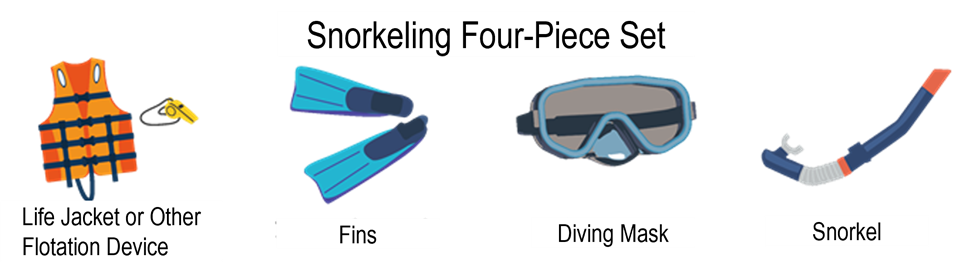
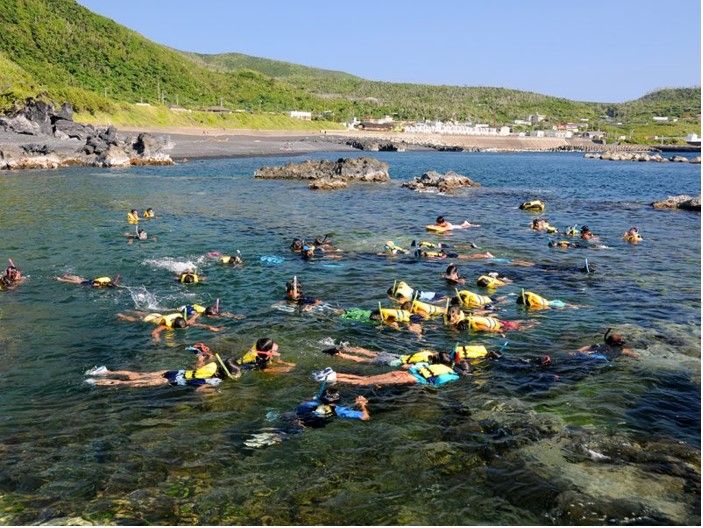
Snorkeling is an activity in which participants wear a mask, snorkel, fins, and a life jacket or other flotation device (the four-piece snorkeling set), ensuring sufficient buoyancy on the water surface. While floating and moving on the surface, they continuously breathe through the snorkel (a tube-shaped breathing device) and observe the underwater environment from the surface.
Snorkeling in the ocean allows you to observe diverse marine life and underwater terrain. However, without basic skills such as mask clearing and snorkel clearing, panic may occur and lead to dangerous situations. Wear appropriate equipment and follow rules and manners to enjoy snorkeling safely.
For Those Who Enjoy Snorkeling
Learn Proper Snorkeling Practices
- Snorkeling involves wearing the “four-piece snorkeling set” listed below, maintaining sufficient buoyancy on the water surface, moving while floating, and continuously breathing through a snorkel while observing the underwater environment.
Snorkeling
From the Snorkeling Handbook
- Learn basic skills such as snorkel clearing (removing water from the snorkel), mask clearing (removing water from the mask), and proper fin techniques. Participating in training conducted by certified instructors is also effective.
- Always check weather and sea conditions before snorkeling.
- For safety, practice the buddy system (working in pairs) or group activities.
- While snorkeling, remain in your group and regularly check each other’s condition.
- If you experience equipment trouble or injury and cannot continue, blow the whistle attached to your life jacket to alert others.
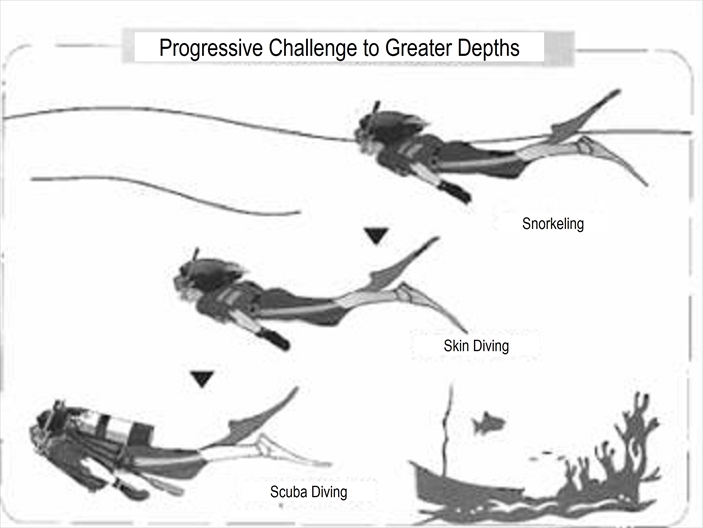
Diving without a flotation device is generally classified as skin diving. Skin diving requires sufficient experience and knowledge of the ocean.
Snorkeling Safety Handbook for Beginners
Click to open the PDF(JapaneseOnly)
Image provided by: Japan Marine Recreation Association
About the Snorkeling Leaflet
Leaflets providing safety guidance for snorkeling are available. Please refer to them.
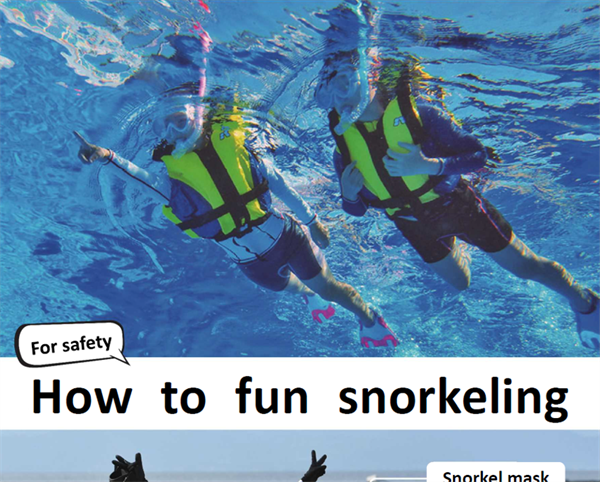
Click to open the PDF.
Standards for Snorkeling Guides and Instructors
Accident Cases
Accident Caused by Poor Physical Condition Management
The individual visited a beach with friends and was snorkeling when water entered the mask, causing discomfort. While swimming back toward the beach, the individual experienced a leg cramp and repeatedly sank and resurfaced while treading water. A friend noticed the situation and called for help.A lifeguard responded to the call for assistance, recovered the individual from the seabed, and transported them to the beach. The individual was then airlifted to a hospital by a medical helicopter.Medical examination resulted in a diagnosis of drowning, with suspected hypoxic encephalopathy, requiring hospitalization and medical treatment.
Accident Caused by Failure to Clear the Snorkel
The individual visited the island for sightseeing with their younger brother and joined a snorkeling tour. After receiving instructions from an instructor on how to use the snorkel and other equipment, the individual wore a mask, snorkel, fins, and a life jacket, then entered the water from the boat to begin snorkeling.Immediately after starting, seawater entered the snorkel, and the individual aspirated water and panicked. The individual was recovered onto the boat by the brother and the instructor.Subsequently, the individual was transported by aircraft to mainland Japan, where medical examination diagnosed aspiration pneumonia, requiring a 12-day hospitalization.
Accident Caused by Failure to Clear the Mask
The individual visited a beach with three friends and began snorkeling with one of them. While attempting to swim back to shore after realizing they had been carried offshore, the individual removed their mask to clear fogging. At that moment, a wave struck, causing the individual to aspirate seawater and panic.A friend noticed the situation and supported the individual to prevent drowning, after which they were rescued by a recreational fishing boat passing nearby.
Update History
- 2026/3/2 The English page for Snorkeling Safety has been published.