SWIMMING SWIMMING
- HOME
- Swimming Safety Information
- About Beaches Not Officially Open
About Beaches Not Officially Open
Some beaches that usually open each year may suspend operations. This section explains the risks and concerns associated with beaches that are not officially open.
1. Risks at Beaches Not Officially Open
- Officially opened beaches have an operating body responsible for safety management.In contrast, beaches that are not officially open have no operating body, meaning proper safety management may not be in place.The following risks may arise at such locations
Delayed Rescue Due to Absence of Lifeguards or Safety Patrols
- Officially opened beaches typically station lifeguards or safety personnel, enabling prompt response to accidents. They can also provide first aid for jellyfish stings, heatstroke, and other incidents.
- At unregulated beaches, the absence of such staff may delay rescue, and no first aid support is available.
Accidents Caused by Mixing Swimmers and Watercraft Due to Unmarked Swimming Areas
- Officially opened beaches usually set buoys or nets to mark swimming areas, separating swimmers from personal watercraft and other water activities.

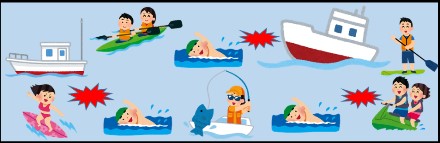
- At unregulated beaches, swimming areas are not marked. Watercraft such as personal watercraft (PWC) may enter the same area as swimmers, increasing the risk of collisions.
2. How to Enjoy Swimming Safely
- Unregulated beaches lack proper safety management and pose a higher risk of accidents.
- Before swimming, check the local municipality’s website for the latest information on beaches officially open for swimming. Choose a beach with clearly marked swimming areas and proper safety management such as lifeguards and patrol staff.
- Additional precautions for safe beach use are also provided in the section “Precautions When Playing in the Ocean.”