SWIMMING SWIMMING
- HOME
- Swimming Safety Information
- How to Help Someone Who Is Drowning
How to Help Someone Who Is Drowning
- 1. Call for Help First
- 2. Put Your Own Safety First
- 3. Use Nearby Floating Objects to Provide Buoyancy
1. Call for Help First
At an Official Swimming Beach
 If you see someone drowning at a swimming beach, keep your eyes on the person and immediately alert lifeguards, safety staff, or people nearby.
Outside Official Swimming Beaches
- Outside official beaches, call the emergency numbers 118 (Japan Coast Guard), 110 (Police), or 119 (Fire Department) for rescue.In such cases, be prepared to clearly provide:
①What kind of accident has occurred
②The exact location of the accident
③The number of people involved
④Your name and contact information
These details are very important. Stay calm, keep the drowning person in sight, and provide this information clearly.
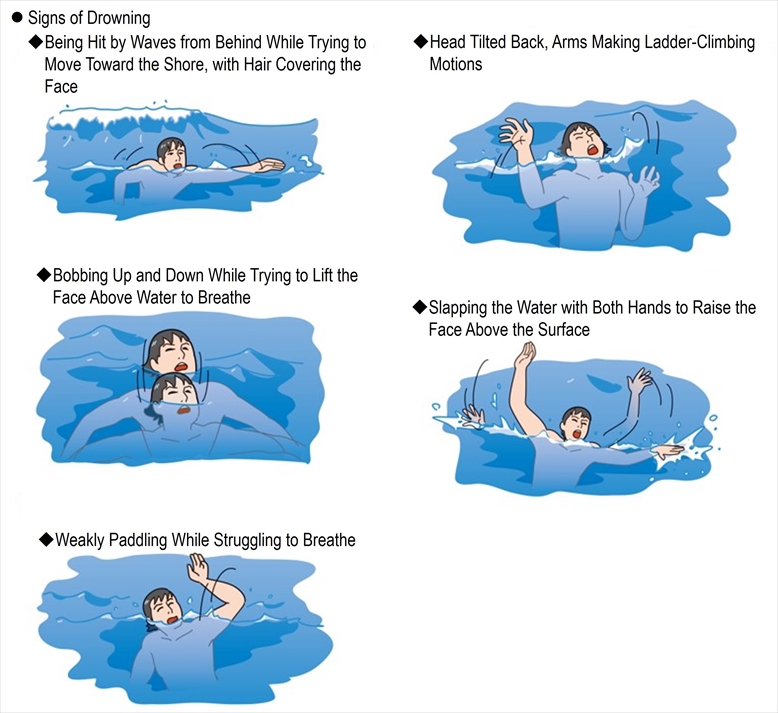
Image provided by: JAPAN LIFESAVING ASSOCIATION
2. Put Your Own Safety First
- Entering the water to rescue a drowning person is very dangerous. First ensure your own safety and use equipment or tools to assist whenever possible.
- Do not attempt a rescue alone. Ask people around you to help.
3. Use Nearby Floating Objects to Provide Buoyancy
- When you see someone drowning, help them secure buoyancy using any floating objects around you.
- At the beach, typical floating items include lifejackets, inflatable rings and other float toys, bodyboards, and kickboards.
Larger plastic bottles, beach balls, and even coolers can also provide buoyancy. When planning activities at the sea, consider these preparations in advance.
Important Points to Remember
- When using a plastic bottle, put a small amount of water or sand inside and close the cap. This makes it easier to throw.
- Throw the floating object so it lands within reach of the drowning person’s outstretched arm, but be careful not to hit them directly.
- If an automated external defibrillator (AED) is available nearby, prepare it so it can be used immediately when the person is brought ashore.
- If you are trained in chest compressions or rescue breathing, assist with first aid. It is highly recommended to attend basic lifesaving or CPR courses provided by your local fire department.