SWIMMING SWIMMING
- HOME
- Swimming Safety Information
- More Detailed Swimming Safety Information
More Detailed Swimming Safety Information
- 1. About Lifejackets
- 2. Definition of Drowning
- 3. Where Drowning Occurs
- 4. Mechanism of Drowning
- 5. About Hypothermia
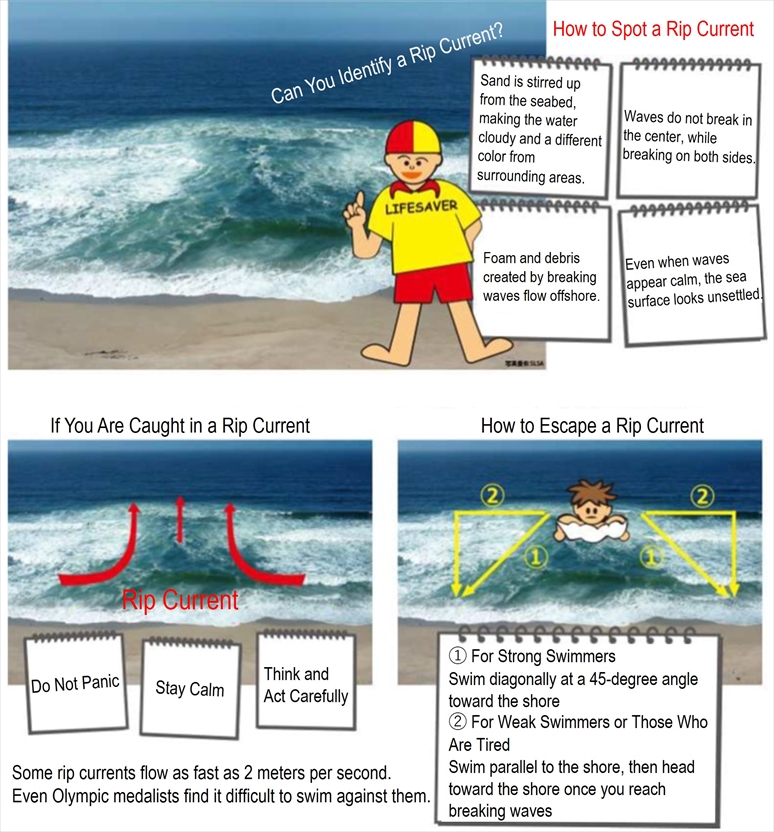
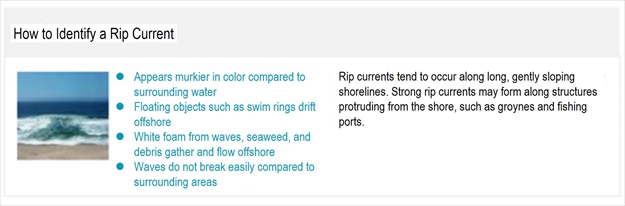
- 6. How to Recognize and Respond to Rip Currents
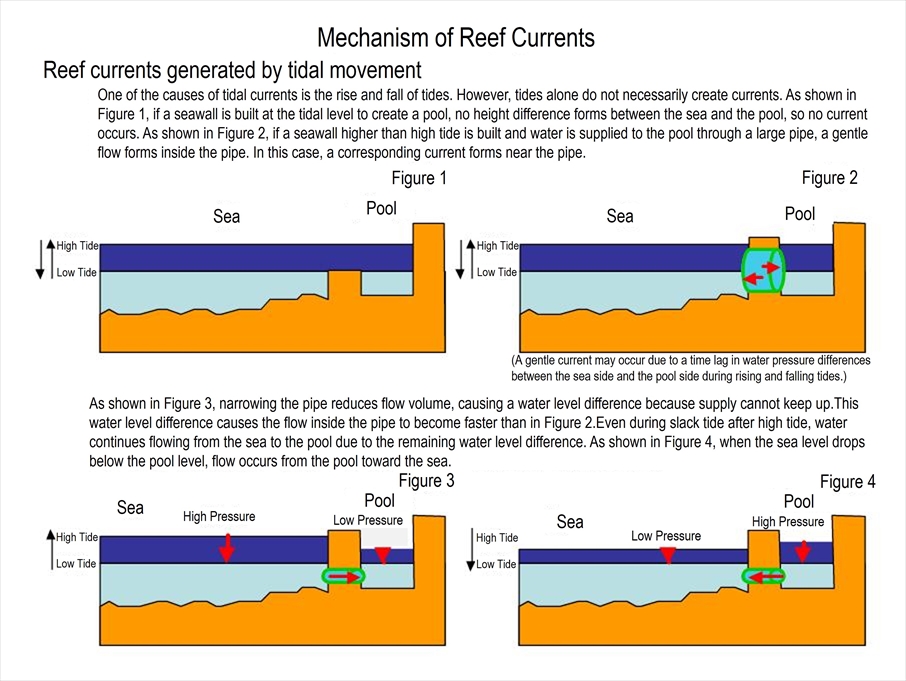
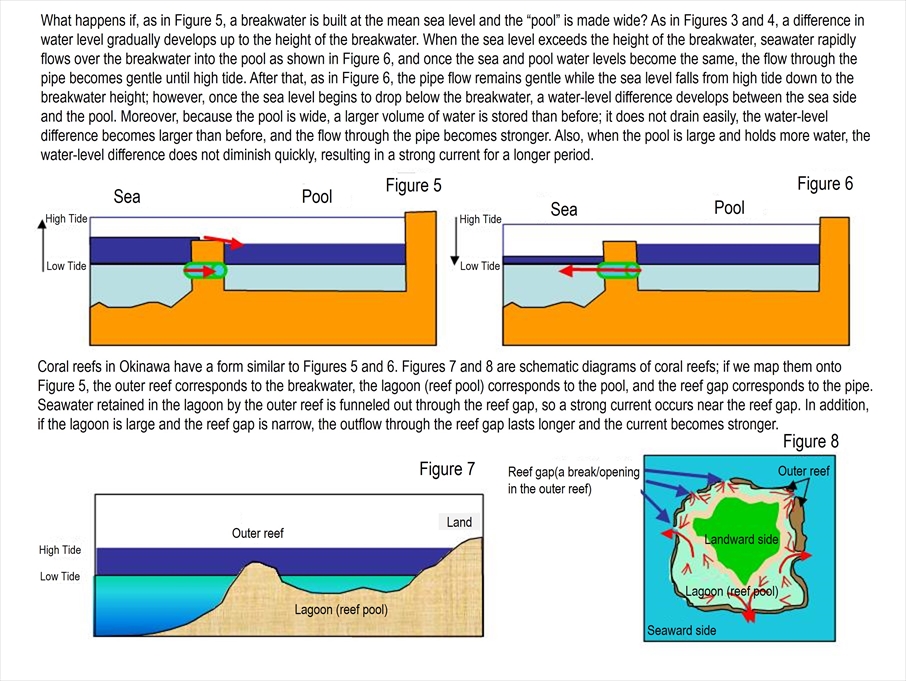
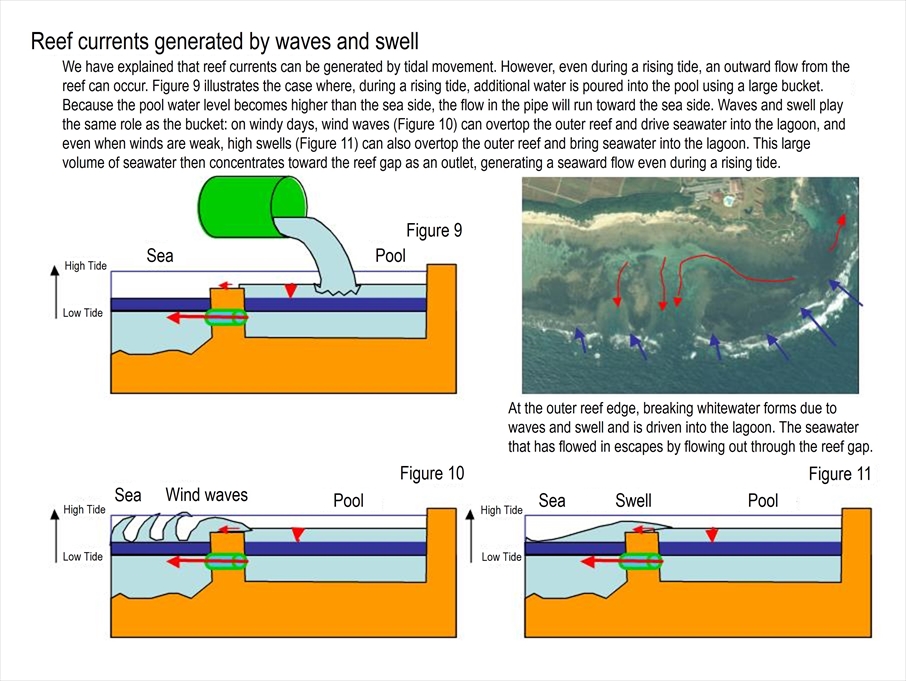
- 7. What Is a Reef Current?
1. About Lifejackets
- For swimming activities, there is currently no legal standard or classification specifically designated for lifejackets.
There are many types of lifejackets. Some have been tested and certified by public bodies or other official organizations.
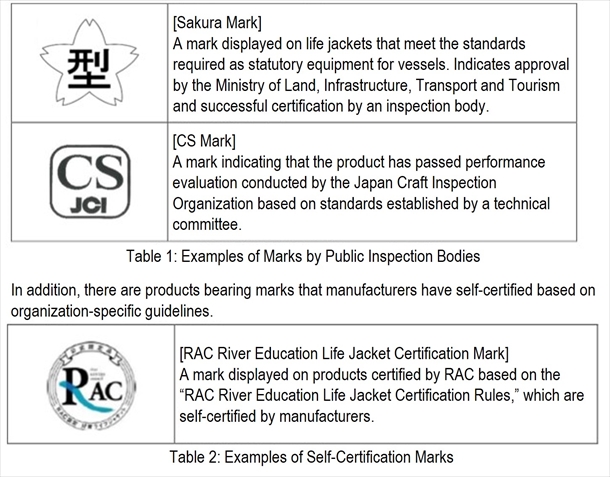
(Adapted in part from the Consumer Affairs Agency material “Prevent Water Accidents Involving Children – July 25 is World Drowning Prevention Day”.)
- Some lifejackets may not carry certification marks, and unfortunately, some products do not meet the performance levels claimed on their labels.
Do not rely only on the label. Check carefully and choose a lifejacket suitable for the specific water activity you will be doing. - Make sure you know the performance and limitations of the lifejacket you intend to wear.
- A lifejacket may not function properly if it is not worn correctly. When purchasing one, choose a size and type that fits your body.
- When putting on a lifejacket, fasten all belts and straps securely so that it cannot come off. Learn the correct way to wear it beforehand.
Note: Children’s lifejackets are labeled “infant,” “child,” etc. If a child wears an adult lifejacket, it may come off in an emergency and fail to provide the intended protection.
How to Wear a Foam (Non-Inflatable) Lifejacket for Children
[Click to play the video]】
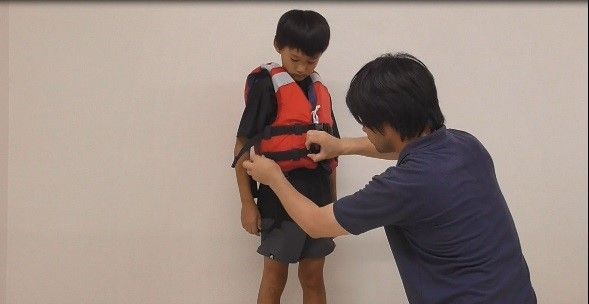
※This is only one example of how to wear a lifejacket. Always check the instructions for your specific model and follow them carefully.
Terminology Used Worldwide
PFD (Personal Flotation Device).
For more details, please see:
(Japanese only).
2. Definition of Drowning
- In Japan Coast Guard investigations, “drowning at sea” refers to situations where a person can no longer move or act normally due to accidental swallowing or inhalation of seawater, muscle cramps, or similar causes.
- The World Health Organization (WHO) defines drowning as “the process of experiencing respiratory impairment from submersion or immersion in liquid.”
- For more detailed information on the causes of drowning and water-related deaths, see the materials provided by the (Japanese only).
3. Where Drowning Occurs
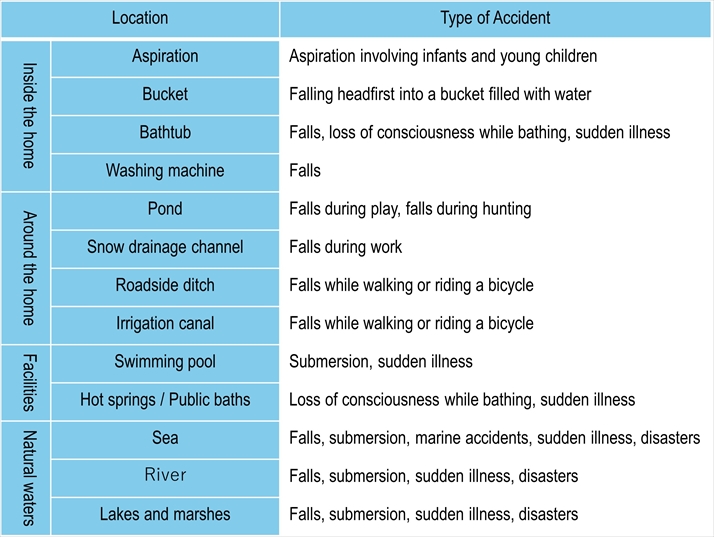
- Water accidents occur not only in rivers and the sea but also in many everyday locations.In Japan, a large number of fatalities occur in bathtubs at home, as noted in the training materials of the Japan Society of Aquatic Safety and Education.
4. Mechanism of Drowning
- The drowning process can be divided into several stages. In the worst case, it progresses through these stages and ends in death.
(Based on the Japan Society of Aquatic Safety and Education training text.)
①Panic
②Respiratory arrest
③Impaired consciousness
④Convulsions
⑤Cardiac arrest
- Panic
In the panic stage, the person senses danger and experiences intense fear.Their movements may suddenly stop, and in water where the feet cannot reach the bottom, the body becomes vertical and begins to sink.Without adequate swimming ability or buoyancy, they may not be able to return to the surface. - Respiratory Arrest
In the respiratory arrest stage, water enters the mouth and nose, some of it moving toward the airway. This disrupts normal breathing, and the person gradually loses the ability to take in oxygen, leading toward loss of consciousness.This leads into the stage of impaired consciousness. In some cases, the epiglottis may close off the airway as a reflex. - Impaired Consciousness
At this stage, the drowning person shows little or no purposeful movement.It becomes difficult or impossible to observe normal chest movement or hear breathing.Once consciousness is completely lost, the body sinks.The rate of sinking depends on factors such as body weight, muscle mass, and the amount of air remaining in the lungs.For example, shouting “Help!” just before going under expels air from the lungs, causing the body to sink more quickly.Consciousness will not return unless and until breathing and circulation are restored. - Convulsions
If breathing is not restored, oxygen supply to the brain is interrupted, and convulsions may occur.With progressing hypoxia, hemoglobin loses its bright red color, and the lips and fingernails may turn bluish-purple (cyanosis). Froth may appear at the mouth. - Cardiac Arrest
In the final stage of drowning, the heart eventually stops.If breathing cannot be restored, cardiac arrest usually occurs within a few minutes.The organs no longer receive oxygen-rich blood, and this leads to death.
- Panic
5. About Hypothermia
- Hypothermia is a condition in which the body core temperature drops below 35°C after prolonged exposure to a cold environment.Special care is needed during winter swimming or marine sports in cold water.Wearing wet clothing for a long time also causes rapid loss of body heat.People are also more prone to hypothermia if they are unconscious, heavily intoxicated, or have endocrine disorders such as thyroid disease.Infants and elderly people are especially susceptible because their ability to regulate body temperature is immature or reduced.
Symptoms
- At first, the person feels cold and begins to shiver. When core temperature falls below about 32°C, shivering actually decreases.Activity levels decline and mental confusion or impaired consciousness may appear.Below about 30°C, the heart rate slows (bradycardia), and the risk of dangerous arrhythmias increases, particularly ventricular fibrillation.
(Source: Japan Lifesaving Association.)
6. How to Recognize and Respond to Rip Currents
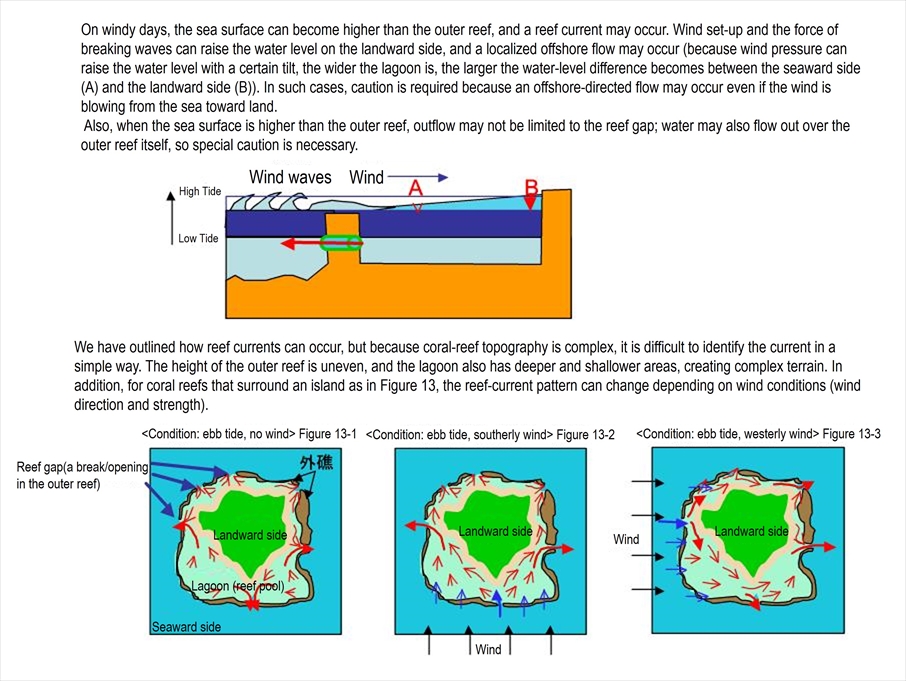
7. What Is a Reef Current?
- A “reef current” is a strong, narrow current that forms inside or near coral reefs. It is similar to a rip current but occurs in reef environments.
- For more detailed information (Japanese only), see the website of the .
Images provided by: Japan Lifesaving Association